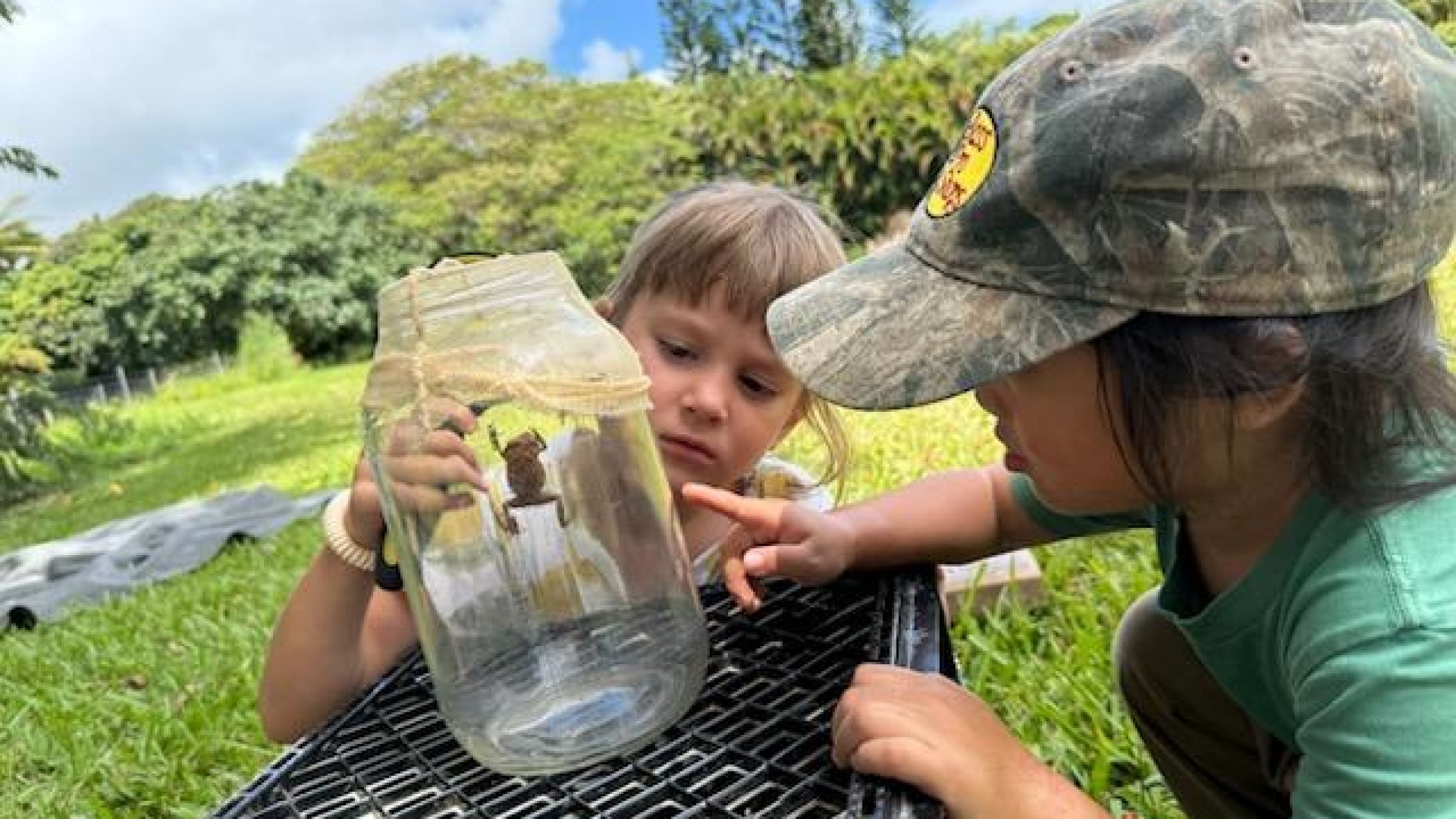
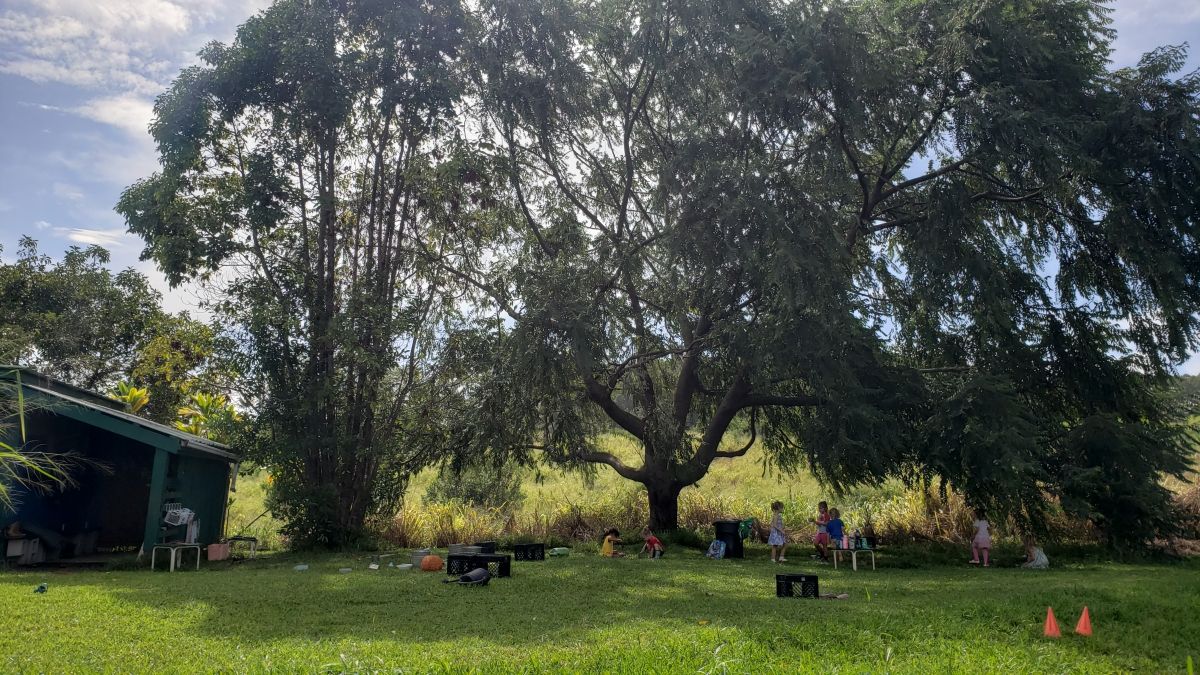
Keiki O Kahawai – Hāmākua Forest School is located on the east side of Hawaiʻi Island, serving the communities of Honomū and Honokaʻa. The school offers part-time, child-led, and play-based programming that takes place entirely outdoors on two separate farms. The Honomū program serves children ages 3–5 and meets twice weekly for morning drop-off sessions. The Honokaʻa program is designed for children ages 4–8 and meets once a week for a six-hour day.
Keiki O Kahawai also hosts Friends in the Forest, a weekly drop-in, donation-based family gathering at Kalōpā State Park in Honokaʻa, where families come together under an ʻŌhiʻa lehua tree to sing, explore the forest, listen to stories, play, and build community.
Natural Start spoke with Keiki O Kahawai – Hāmākua Forest School’s founder, Jennifer Kane, to learn more.
What does place-based learning look like at Hāmākua Forest School, and why is it important?
We spend much of our forest school day noticing and wondering together. The place where our keiki (children) play guides much of their learning. When a child finds something curious, we engage them in conversation: What do you notice? What do you wonder? What does it remind you of? In How to Teach Nature Journaling, John Muir Law suggests that these prompts lay a powerful foundation for how students explore, observe, and learn about the world around them. We have also found this approach naturally supports the development of cognitive, language and communication, and social-emotional skills.
Watch the short video below to see how we center inquiry-led engagement in children's learning experiences.
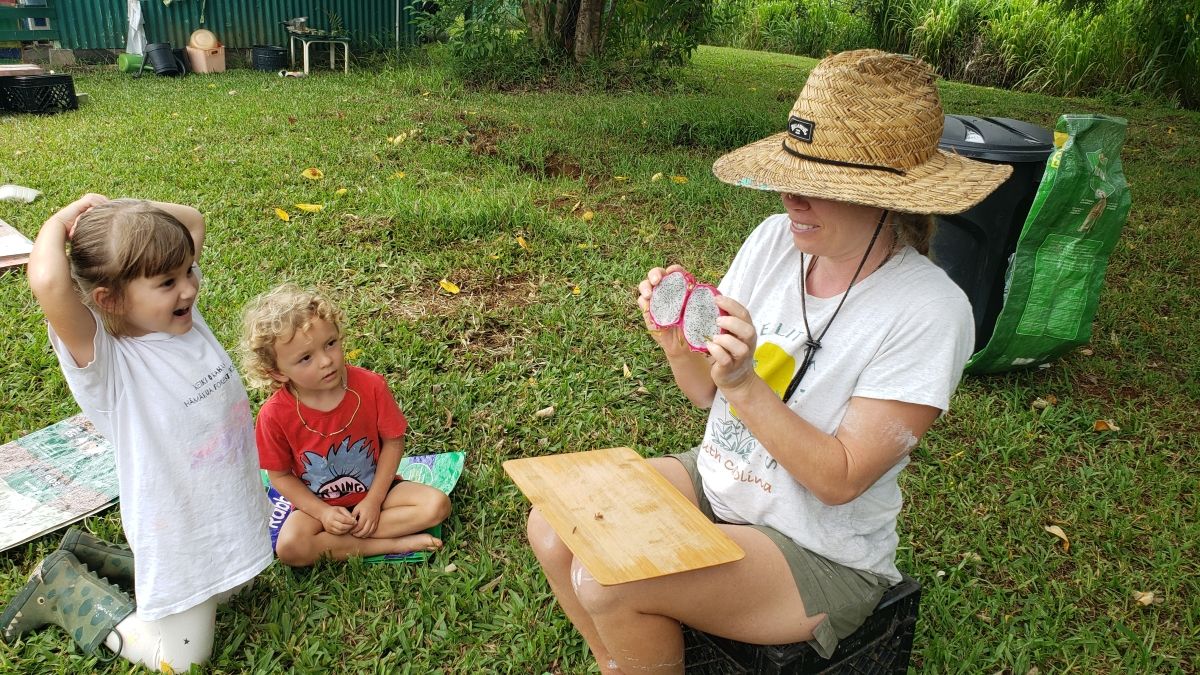
Once a week, we introduce a seasonal fruit or vegetable during our ʻāina activity. The word ʻāina means “land” in the Hawaiian language, and is often used to reflect a broader relationship among all elements of the natural environment. Using the same prompts, we invite children to explore, discuss, and taste locally grown foods. By fostering observation and wonder at an early age, we hope to nurture lifelong critical thinkers—keiki who are connected to and empathetic toward the land where they play and learn.
Tell us about your goal to become a vendor for the Department of Education to train teachers in nature-based education.
Since starting my forest school, I have felt a deep commitment to reaching more children and sharing the magic of outdoor play and nature-based education with the broader preschool teaching community. After presenting about my school at local NAEYC conferences, I realized that many educators are eager to offer more nature-based, outdoor learning opportunities, yet often feel ill-prepared to take children outside or face regulations that limit what they can do outdoors with their students.
As I pursue this goal, I hope to begin by working with teachers and school communities to identify the barriers to nature-based learning. From there, we can collaborate to move beyond these roadblocks and develop accessible ways to integrate outdoor and nature-based practices into the school day.
Why do you feel it’s important for nature-based education to be part of broader community schooling options?
My preschool program consistently has a waitlist, with some children traveling over an hour to attend. I regularly receive emails from families across the island and state wishing a similar program existed closer to their homes. Access to this type of learning should be a right, not a privilege—especially when research shows outdoor, nature-based education supports cognitive, physical, and social-emotional development, and is deeply joyful.
To make the greatest impact, the broader schooling community must be part of this shift, ensuring every child has the opportunity to learn and grow in nature.