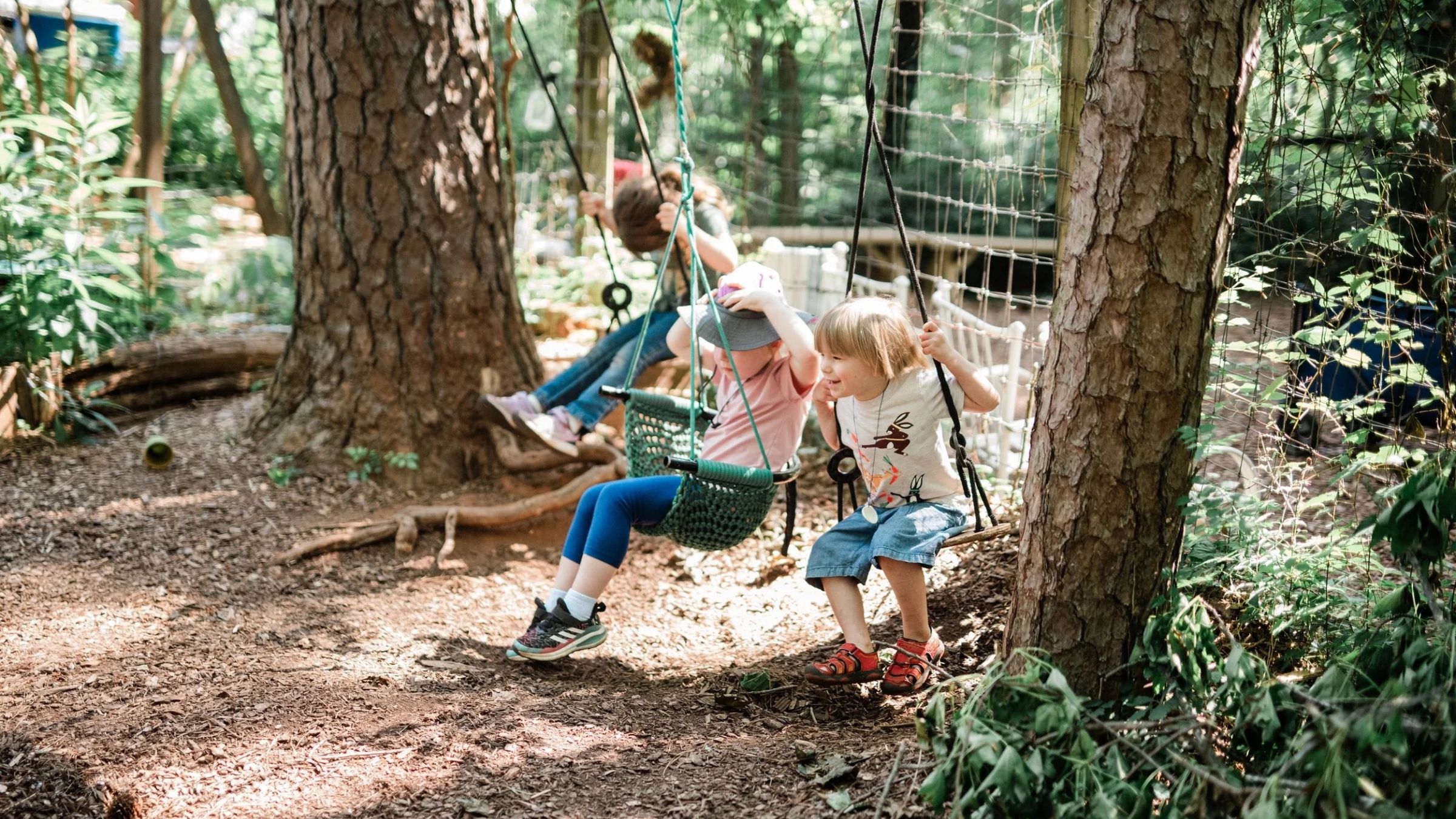
The Language Garden is a nature-based, bilingual (English/Spanish) preschool located southeast of downtown Atlanta, serving about 36 children ages two to six across three outdoor classrooms set within the school's woods, meadows, and gardens.
Children spend their days immersed in nature play, exploration, and connection. The curriculum is emergent and child-centered: teachers observe what children are interested in, listen to their questions and ideas, and build experiences and projects from there, all while maintaining the rhythms and routines that give young children a sense of security and belonging. Grounded in play, wonder, co-constructed learning, and unstructured time in nature, the school's philosophy holds an image of the child as capable. Teachers give children room to develop at their own pace, stepping in to support, extend, and celebrate their growing independence and curiosity.
Natural Start spoke with The Language Garden’s director, Leah Cauley, to learn more.
As a bilingual preschool, how does teaching in both English and Spanish support whole-child development?
At the Language Garden, we hold nature and play at the center of all that we do, and language—whether English or Spanish—flows naturally from this. We see language as one of the ways young children make sense of their world and connect with the people around them. English and Spanish are woven into each day through songs, stories, routines, play, projects, and outdoor exploration.
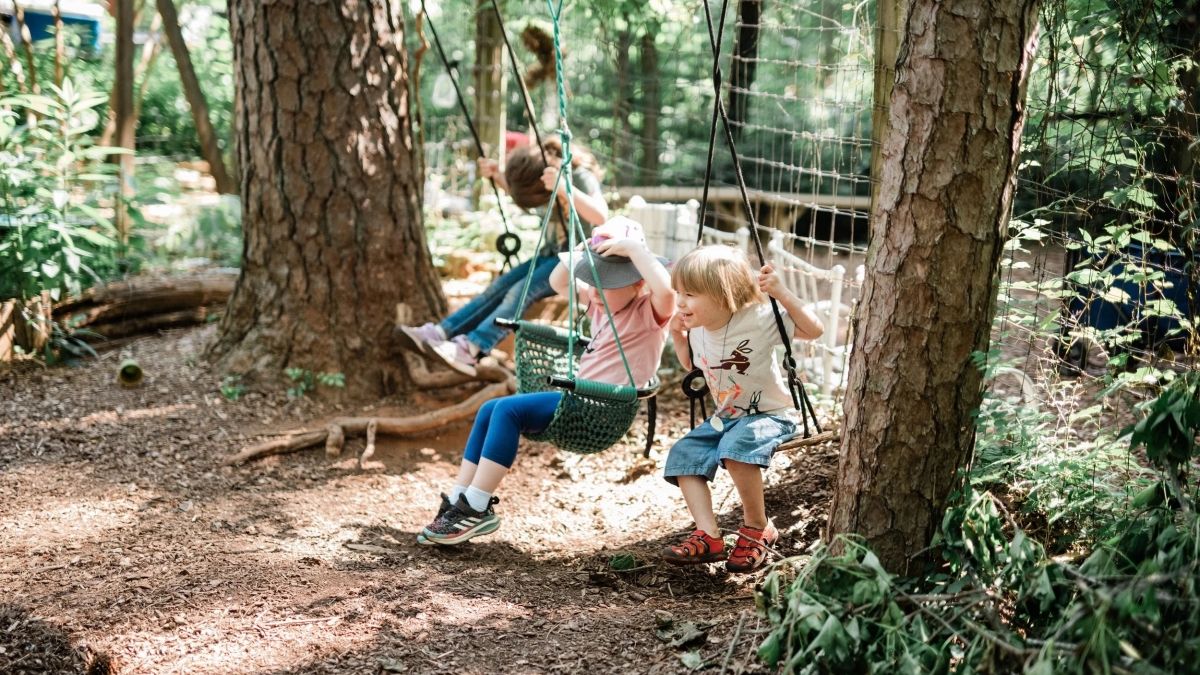
For preschoolers, language develops through movement, repetition, imagination, conversation, and relationships. Hearing and using both languages throughout the day gives children chances to listen, experiment with words, express ideas, and communicate with others. It also builds their confidence in trying something new and their appreciation for the many ways people experience and express themselves.
How does the nature-based aspect of your school support language learning in young children?
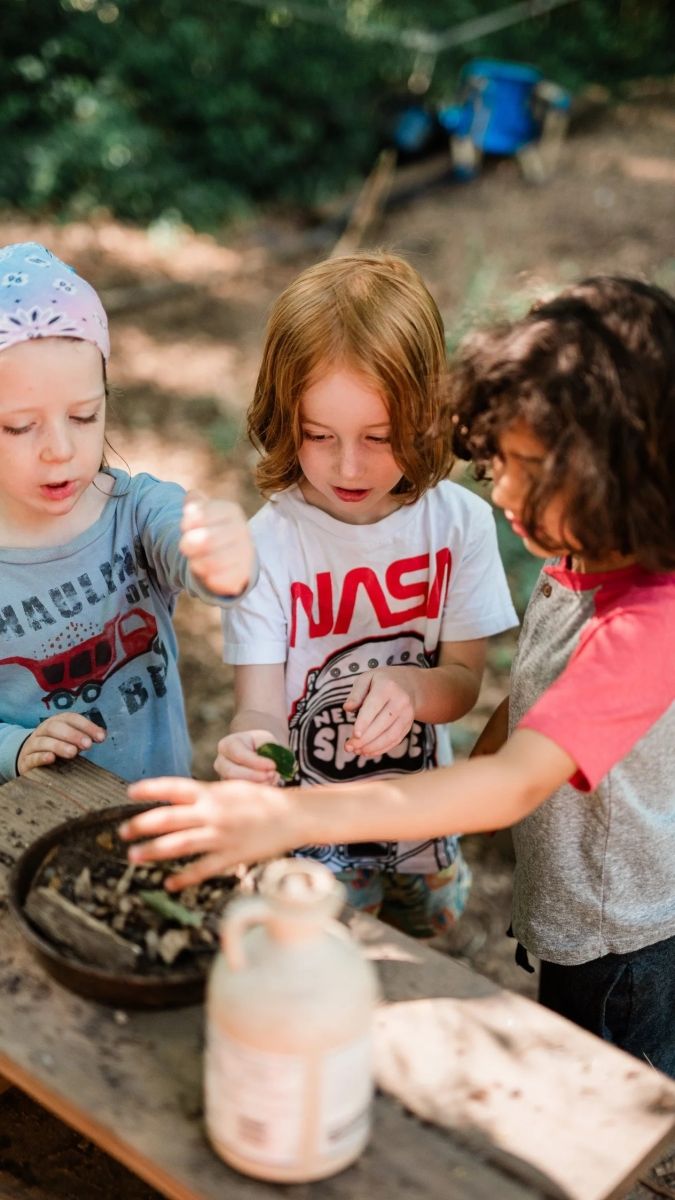
Our nature-based program gives children the time and freedom to follow their own interests, which makes language learning naturally child-led. A child noticing a particular insect, plant, stick, or puddle can become the starting point for observation, conversation, storytelling, and further exploration. Teachers listen for those interests and use them as opportunities to introduce new vocabulary, ideas, and Spanish in ways that are meaningful to each child. Because children are actively engaged in something they've chosen to investigate, they have authentic reasons to communicate, collaborate, and share what they're noticing and thinking.
Our Spanish-speaking teachers often observe that children learn language more readily while moving and doing—and in particular, they've noticed a strong connection between creating artwork and learning Spanish. Teachers will often frame an experience around a project or art offering to bring the language to life for children.
Tell us about your program’s campus and the opportunities for collaboration found in sharing the space with other organizations and groups.
The Language Garden occupies about three acres of a six-acre campus that we share with the Atlanta Mennonite Church, Paideia Urban Agriculture (an organic teaching farm for a local independent school), and Hola Land Aftercare. We call one another partners—a practice the church, as landowner, began and that continues today. We meet monthly to talk over any concerns and keep one another informed about our programs, even though our day-to-day work doesn't often overlap.
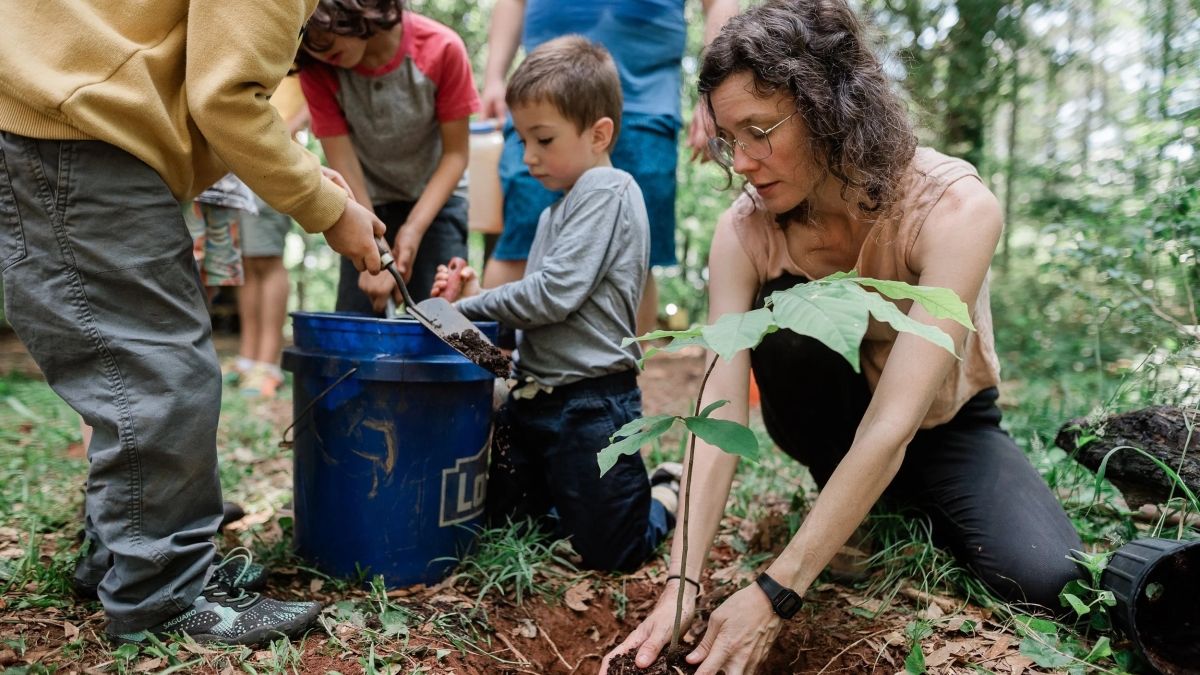
The community embedded on this property becomes a bit like a neighborhood for the children. They say hello to the farmers by name and sometimes stop to see what they're up to. Some families attend the Mennonite congregation's Wild Church on the land. Several years ago, the preschool and the Paideia farm began a shared land stewardship program; the church has since joined, and volunteers from each organization now meet monthly to care for the land together. The hope is to weave a connection with the land and with one another as we tend the beautiful spaces we share.
As a preschool, we also hold several work days on the land, welcoming the whole family to attend—bringing together families, staff, and community members. These experiences connect work and care for a place with a sense of belonging: children see that caring for a place is something we do together, and that they have a meaningful role in the community around them.